Keloid scar
Keloid scar
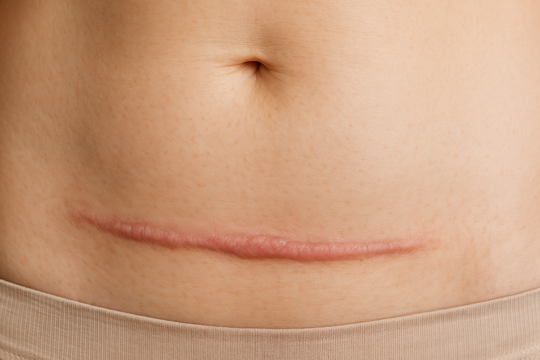
A keloid scar is an abnormal type of scarring where the tissue continues to grow beyond the original wound. This can happen after a C-section, leading to a raised, thickened and (bright) red or purple scar. Spontaneous recovery is unlikely. Without treatment, the scar will continue to grow.
What is a keloid scar?
A keloid is a benign (non-cancerous) overgrowth of scar tissue caused by excessive collagen production. Unlike other scars, a keloid scar grows beyond the original wound edges due to excess collagen production.
The scar can cause many symptoms such as itching, a tight or pulling sensation in the skin, and pain. The skin is often red or purple. In addition to being thickened or swollen, the scar is smooth and often shiny.
Symptoms of a keloid scar
If you’ve noticed a lump on your C-section scar or swelling above the C-section incision, you may be developing a keloid scar. Symptoms include:
- A raised, thickened scar that continues to grow.
- Itching or pain around the scar.
- A raised C-section scar that feels firm or nodular to the touch.
- Reddish, purple, or darkened skin over the scar.
In some cases, women report a lump beneath the C-section scar years later, which may still be related to keloid formation.
How to treat a keloid C-section scar?
Always consult a healthcare professional or midwife before starting any scar treatment. One of the most effective and gentle ways to manage a keloid scar is by keeping it hydrated and protected.
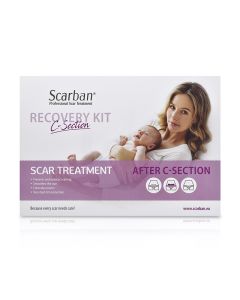
Silicone therapy, such as Scarban C-Section, helps:
- Lock in moisture
- Reduce tightness and redness
- Flatten and soften raised scars
Silicone Therapy is widely recommended by healthcare professionals and is one of the most evidence-based treatments for keloid and hypertrophic scars.
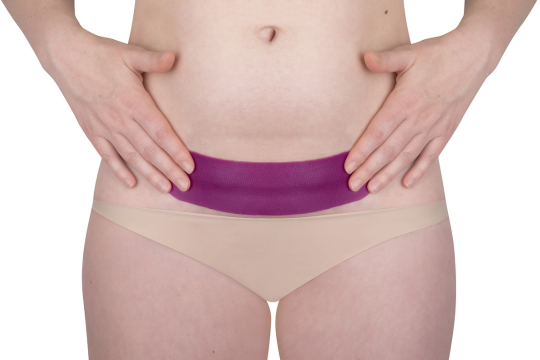
Treat your C-section scar with Scarban
When to start your silicone scar treatment
You can start using Scarban C-Section silicone therapy once your wound is fully closed and any scabs and stitches have disappeared, usually around 2 to 3 weeks after your C-section.
Early signs of improvement may include less tightness and itching as your skin becomes more hydrated. Over the longer term (after several weeks of daily use), clinical studies have shown that silicone therapy helps:
- Flatten and soften hypertrophic and keloid scars.
- Reduce redness, itching and thickness.
- Improve overall cosmetic appearance and skin flexibility.
Research shows that consistent use of silicone scar sheets for at least 8 to 12 weeks leads to visible improvement in scar quality. In many cases, the best results are seen when silicone is used for 3 to 6 months, especially for raised or active scars.
By treating your C-section scar early and consistently, you give your skin the best chance to heal smoothly and with fewer long-term concerns.
What causes a keloid C-section scar?
Genetic predisposition and skin tone play a major role in the development of this type of scar. If you have dark skin, for instance, you have an increased risk of getting it. Keloids most commonly occur on the chest, back, shoulders, and earlobes. If inflammation develops during the healing process, then a keloid can develop.
Keloid scars can form after any type of skin injury, including surgery. The cause of a keloid C-section scar can vary from person to person, but key risk factors include:
- Genetics: If you have a family history of keloids, you're more likely to develop one.
- Skin type: Darker skin tones have a higher risk of keloid formation.
- Excess tension on the scar: Tight clothing or improper wound care can contribute to keloid growth.
How do keloid scars differ from hypertrophic scars?
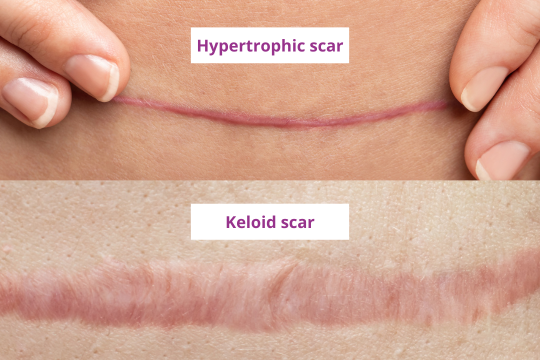
Many people wonder about the difference between a hypertrophic and a keloid scar. While both are abnormal and raised scars, hypertrophic scars remain within the wound area, whereas keloid scars grow beyond the original incision. Also, keloid scars can continue to grow, unlike hypertrophic scars.
Your free guide to scar care and recovery
Learn everything about your scar and treatments options in the free scar guide!